
When work is harder than it should be, it's rarely the person.
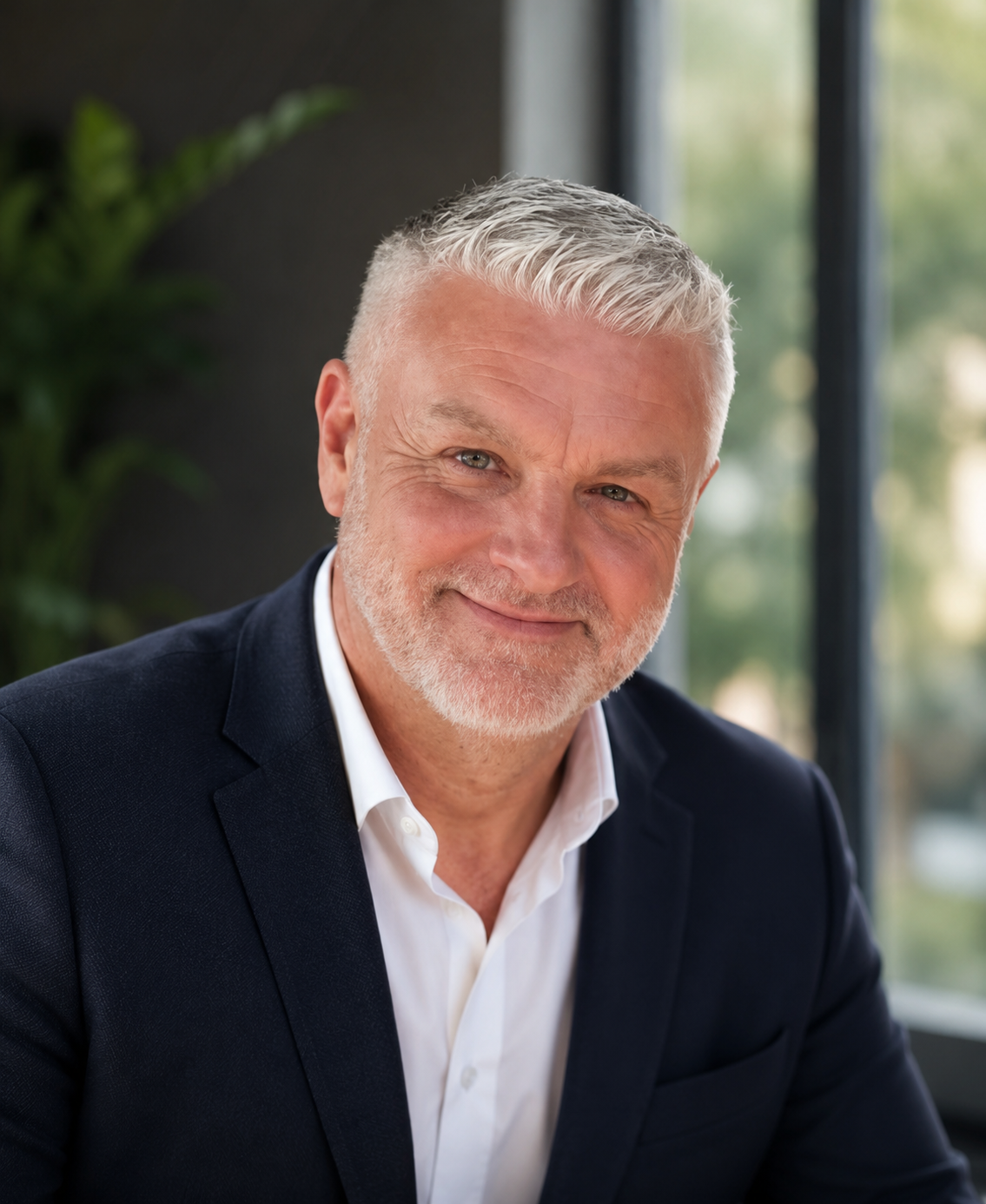
I'm Daniel Dixon, an organisational psychologist. I coach individuals through it, and help organisations fix what's causing it.
I work with individuals, and with the organisations they work inside.
Coaching for individuals
One-to-one work on the things that are hard to say out loud at work.
Neurodivergence and masking, career direction, leadership under pressure.
Consulting for organisations
Structural audits, workshops, and fractional support for workplaces built around an assumed average.
About the work
Most workplaces are built around an assumed average: a standard pace, a standard way of communicating, a standard tolerance for noise, interruption and unstructured time. I have spent my career noticing, often faster and more precisely than anyone else in the room, exactly when a workplace stops working for someone. I am neurodivergent, and that is not incidental to the work, it is the instrument. When management practice asks someone, without meaning to, to trade real contribution for careful compliance, I see it early, because I have lived it.
That pattern shows up everywhere once you know to look for it. People learn to perform a manageable version of themselves, because the real one keeps getting read as too much, too direct, too different. I have worked on this with leaders carrying more than they can say out loud, with people rebuilding after redundancy or burnout, with professionals operating in a second language, and with neurodivergent people in workplaces that were never designed with them in mind. The cost of that performance is invisible to everyone except the person paying it.
Roles built without accounting for how people sustain difficult work.
Support that helps in the moment but removes capability over time.
Leadership habits that feel caring but leave people less able to cope on their own.
Many organisations respond to these patterns with a workshop, a wellbeing benefit, or a new process, something layered on top. It treats the symptom, and it's gone by the time the next quarter starts. I don't work that way. I redesign the structure that's producing the pattern, not the symptom sitting on top of it.
With an MSc in Behavioural and Organisational Psychology and three decades across consulting, education, and programme leadership, I bring research backed thinking to problems that usually get treated with generic fixes.
Areas of Focus
Neuroinclusive practice
Workplace culture
Leadership & communication
Learning & facilitation
Psychological safety
Behaviour & organisational change
Approach
My work combines organisational psychology, facilitation, and reflective practice to support healthier and more sustainable ways of working.
I value clarity, inclusion, curiosity, and practical human-centred thinking.
I am particularly interested in how people experience work, learning, communication, and organisational culture in everyday practice, not only in policy or theory.
My approach aims to balance behavioural insight with thoughtful facilitation, creating spaces for reflection, dialogue, and meaningful organisational development that feels grounded, accessible, and genuinely useful.
Recent Thinking
I write regularly on leadership, learning, and organisational psychology, covering the patterns underneath things like trust, capability, culture change, and how people actually develop versus how organisations assume they do.
Ready to talk ?
A free 30-minute call, no preparation needed and nothing to buy at the end.